
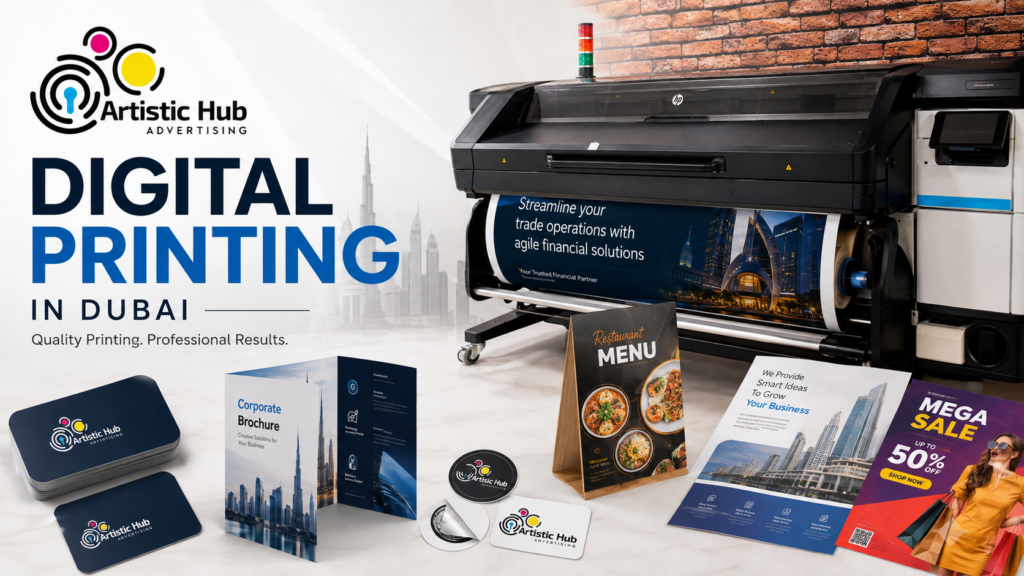
A reliable digital printing service in Dubai can help businesses produce everything from promotional posters and retail graphics to brochures, displays and customized branded materials. The right result depends on the print application, material, artwork quality, quantity and finishing requirements.
For businesses evaluating Artistic Hub’s digital printing solutions, understanding these factors before requesting a quotation can prevent avoidable artwork changes and help the printer recommend a more suitable solution.
This guide explains how digital printing works, where it is commonly used, what to consider when preparing artwork and which questions are worth asking before production begins.
What Is Digital Printing?
Digital printing transfers artwork from a digital file to the selected print medium without the plate-making stage associated with conventional offset printing. This makes the method particularly flexible for customized work, shorter production runs and projects where designs may change between batches. HP similarly describes digital printing as producing output directly from digital designs without the physical plates or screens required by conventional processes.
The term covers several production technologies, so the appropriate method depends on the material, dimensions, intended environment and required finish.
For companies requiring everything from promotional prints to larger display graphics, Artistic Hub’s digital printing services in Dubai include applications such as posters, roll-ups, acrylic, POS displays, one-way vision, vinyl cut-outs and direct printing on flat surfaces.
Where Digital Printing Is Used by Dubai Businesses
Digital printing supports many everyday marketing and operational requirements. The format can range from something held in a customer’s hand to graphics covering a much larger display surface.
Typical applications include:
- posters and promotional graphics;
- brochures, flyers and selected business stationery;
- roll-up and pop-up displays;
- retail and point-of-sale displays;
- exhibition and event graphics;
- window and one-way-vision graphics;
- vinyl graphics;
- mounted display pieces;
- acrylic graphics;
- customized promotional materials.
Artistic Hub separately lists business cards, flyers, brochures, office stationery, ID cards, paper bags, letterheads, menus and labels within its wider printing services offering.
For a retail launch, for example, one project may involve posters, window graphics and POS displays. An exhibition requirement might instead involve a roll-up display, counter graphics and supporting printed literature. Planning these pieces together can help maintain more consistent artwork across the campaign.
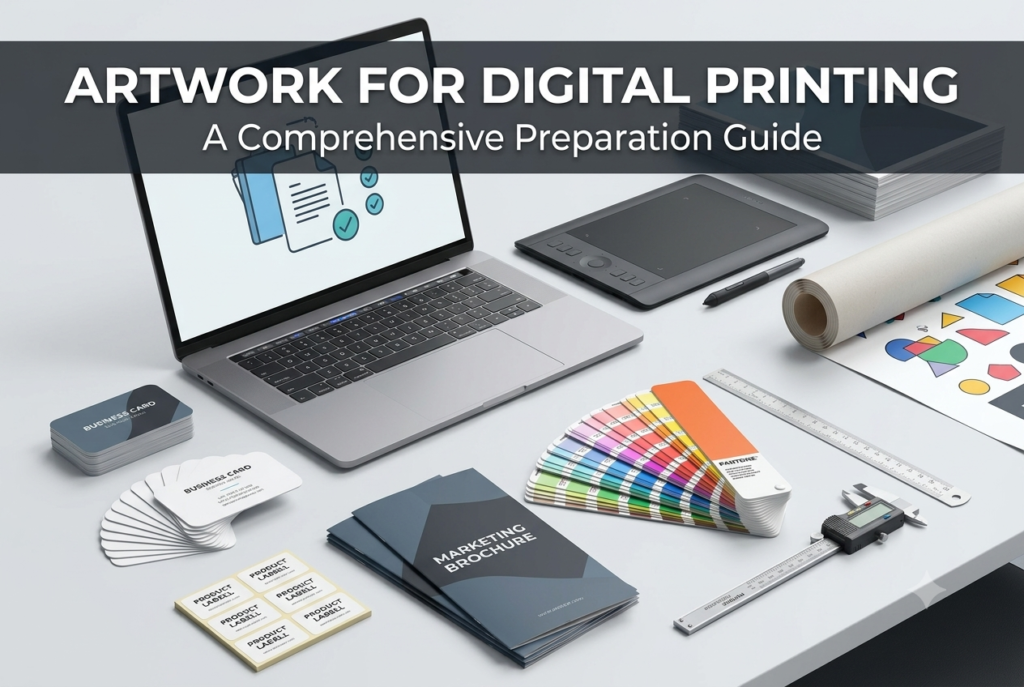
How to Prepare Artwork for Digital Printing
Good output begins before the file reaches production.
Use suitable source files
Where possible, supply the original design file or a properly exported print PDF instead of screenshots or images copied from messaging applications.
Logos should preferably come from vector artwork when available, particularly when they will be reproduced at larger sizes.
Check image resolution
Images that appear sharp on a phone or computer screen may not remain sharp when enlarged for print.
Check the artwork at its intended output size. For unusually large graphics, ask the printer about the appropriate file scale and resolution rather than simply increasing the pixel dimensions artificially.
Prepare colours for print
Screens create colour using light, while commercial colour printing commonly works with print colour processes such as CMYK. Adobe notes that CMYK is used when preparing documents for process-colour printing and also warns that some colours visible in RGB cannot be reproduced identically in CMYK.
This is why a bright colour seen on a monitor should not automatically be assumed to look identical on the finished printed piece.
Include the required bleed and safe margins
Artwork that extends to a trimmed edge usually needs bleed. Important text and logos should also remain safely inside the trim area.
Adobe’s current print-preparation guidance recommends checking links, fonts, bleed, margins and colour settings before exporting a commercial print PDF.
The exact specifications can vary, so ask your print provider for its artwork requirements before exporting the final file.
Finishing Can Change the Final Result
Printing is often only one stage of the project.
Depending on the product, finishing can involve trimming, mounting, lamination, contour cutting, framing or installation. A print intended for a display stand, for example, has different finishing requirements from an unmounted poster.
Discuss finishing before approving the artwork because the final construction may affect margins, cut lines, dimensions or placement of important design elements.
For projects combining printed graphics with physical displays, Artistic Hub also lists display stands within its custom woodworks service.
What Affects the Cost of Digital Printing in Dubai?
There is no useful universal price for a digital printing project because quotations depend on the actual specification.
Important cost factors can include:
- finished dimensions;
- quantity;
- material or substrate;
- number of artwork versions;
- print coverage;
- finishing;
- mounting or fabrication;
- installation requirements;
- delivery requirements.
A request such as “How much is printing?” provides too little information for an accurate comparison.
Instead, send the same complete specification to the suppliers you are evaluating. This makes quotations easier to compare and reduces the chance of discovering later that important finishing or production requirements were excluded.
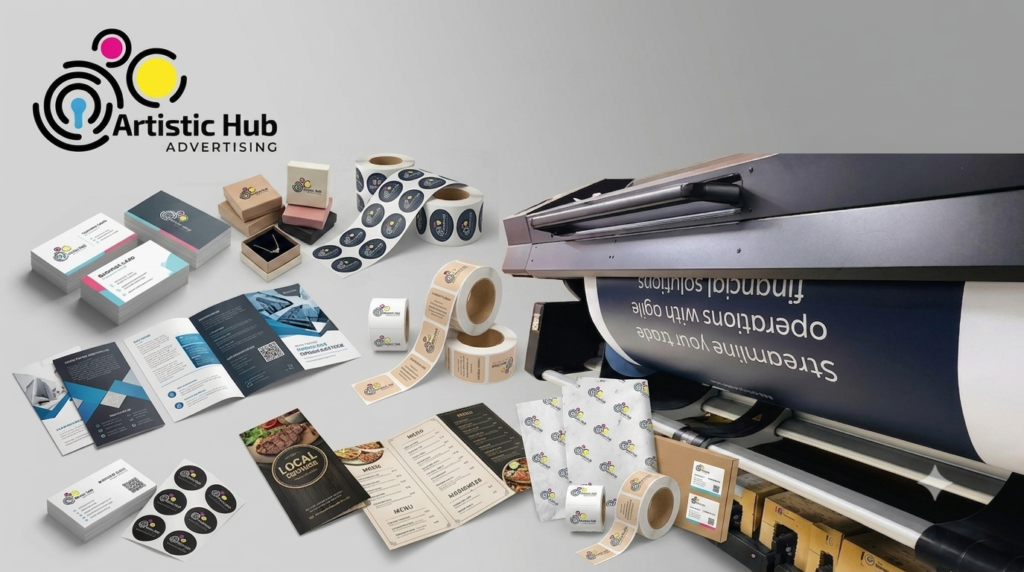
How to Choose a Digital Printing Service in Dubai
Price matters, but it should not be the only question.
Before approving a project, ask whether the supplier can clearly explain:
- which material suits the intended application;
- what artwork format is required;
- whether finishing is included;
- whether installation is required or available;
- what dimensions and quantities are being quoted;
- what you need to approve before production;
- whether the selected solution is appropriate for indoor or outdoor use.
A professional discussion should make the specification clearer, not more confusing.
For larger business projects, it can also be useful to choose a production partner that handles related requirements. This may reduce coordination when a campaign combines printed collateral, displays, packaging or other branded items.
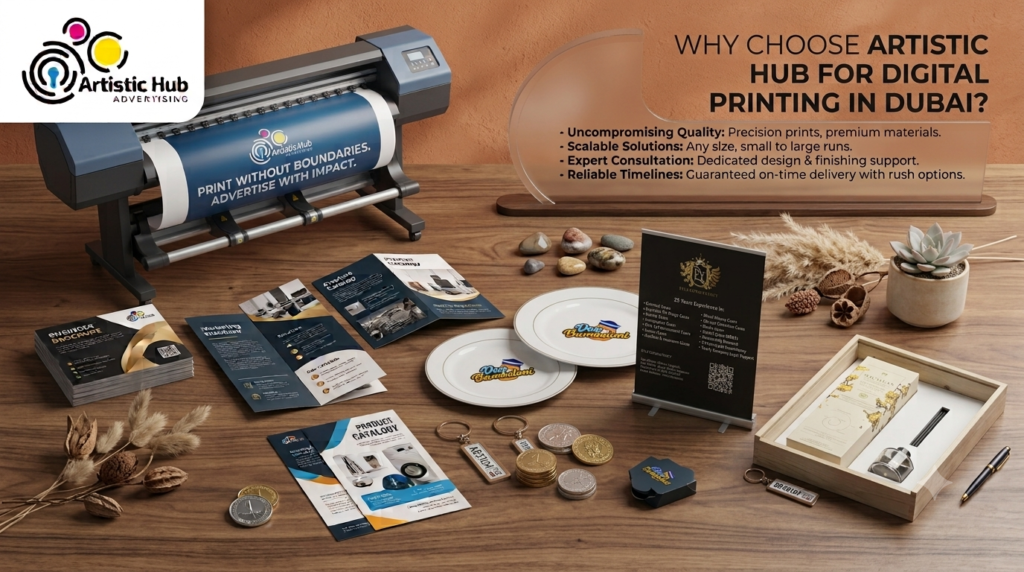
Why Choose Artistic Hub for Digital Printing in Dubai?
Artistic Hub is based at S-6, Street 13, Al Quoz Industrial Area 1, Dubai, UAE. The company’s website lists digital printing alongside wider printing, packaging, personalized-product, garment-printing and display-related production services. Its Digital Printing section includes roll-up and pop-up displays, posters, direct printing on flat surfaces, canvas and photo printing, one-way vision, vinyl cut-outs, acrylic, POS displays and vehicle branding.
That range is useful when a project involves more than one printed format—for example, a retail campaign requiring posters and POS material or an event requiring printed graphics and display elements.
Planning a Printing Project?
Send the project dimensions, required quantity, intended use, artwork and any finishing requirements when requesting a quotation. A clear brief makes it easier to discuss the appropriate production option.
Frequently Asked Questions
What can a digital printing service in Dubai produce?
Digital printing can be used for many applications including posters, promotional graphics, business collateral, display materials, vinyl graphics, POS displays and selected rigid-surface applications. The correct process depends on the dimensions, substrate, quantity, finishing requirements and where the finished print will be used.
Is digital printing suitable for small quantities?
Digital printing is commonly considered for shorter print runs because it does not require the same plate-making setup as conventional offset production. However, the most economical method depends on the exact product, material and quantity. Ask the printer to compare production methods when requesting larger quantities.
What artwork should I send to a printing company?
A print-ready PDF or original professional design file is usually more useful than a screenshot or low-resolution image. Include suitable-resolution images and vector logos where possible. Before exporting, ask your printer about preferred colour settings, bleed, safe margins, cut lines and any special requirements for the selected product.
Why can printed colours look different from my screen?
Screens generally display RGB colour using light, while commercial print workflows frequently reproduce colour through CMYK inks or other printing systems. The available colour ranges are not identical, so some screen colours cannot be reproduced exactly in print. Colour profiles, materials, inks and production conditions can also affect the result.
What information should I provide when requesting a digital printing quote?
Provide the finished size, quantity, number of designs, preferred material if known, intended use, artwork status and required finishing. If the item will be installed, mention the installation location or surface as well. A complete brief makes different quotations much easier to compare.
Can one supplier handle printing and related branded materials?
Some production companies offer services beyond digital print. Artistic Hub’s website, for example, separately lists general printing, packaging, personalized gifts, garment printing and wood/display-related services.